Menu
Log in

Hot Topics in Total Rewards

<< First  < Prev   1   2   3   4   5   ...   Next >  Last >> 
  • May 05, 2026 7:59 AM | Bill Brewer (Administrator)

    Where College Graduates Are Getting Hired and Why the Best Career ...

    Story by Jason French, Ray A. Smith, Stephanie Stamm

    A string of cities across America’s Sunbelt are emerging as graduate-hiring hot spots in an otherwise challenging job market for young professionals, an exclusive analysis shows.

    Birmingham, Ala., tops the list of the places where newly minted graduates are landing jobs with a college-level career track, followed by Tampa, Fla., according to the new study by payroll processor ADP. In fact, six of the list’s top 10—including Raleigh, N.C.; Tulsa, Okla.; Nashville, Tenn.; and Charlotte, N.C.—are in the South.

    Other pockets of the country also punch above their weight as early-career launchpads for their mix of 20-something hiring, pay and affordability. Columbus, Ohio, and California’s San Jose area unexpectedly got top scores this year—evidence that even places with so-so earning potential or high costs of living can be prime locations for landing that first job postgraduation.

    Altogether, the ADP analysis—which measured 53 of the country’s biggest metro areas—shows that what looks like a nascent recovery in graduate hiring is happening unevenly. Recent data shows companies are boosting entry-level hiring this spring after holding back for several seasons, but their appetite hinges a lot on the kind of role, sector and location.

    See which cities, and regions, offer the best prospects, and how your location stacks up at the end.

    What makes for a fertile spot to launch a career?

    Researchers crunched ADP payroll data for more than 400,000 U.S. 20-somethings nationwide. They then weighed hiring rates for jobs that typically require a degree against affordability-adjusted pay in each location.

    “If you can get that right mix of hiring, pay and affordability, it’s a really attractive launch point for a young person,” said Nela Richardson, ADP’s chief economist.

    The rankings reveal a U.S. economy—and entry-level job market—in flux. A modest rebound in junior tech-industry jobs helped lift greater San Jose to No. 3 from No. 14 a year ago, while a sharper hiring surge in the Tampa-St. Petersburg region in Florida boosted it to second place from 26th.

    Where the jobs are

    Birmingham rose to the top with one of the strongest hiring rates for 20-somethings in college degree-level jobs and an even better affordability score. Median annual wages for recent graduates, meanwhile, rose more than 16% to $59,004, according to the ADP data.

    The area is home to a big bioscience sector, anchored by the University of Alabama at Birmingham, and large employers in the automotive and advanced-materials industries, said Trevor Sutton, vice president of economic development at the Birmingham Business Alliance. The latter group has fueled demand for engineers at such companies as Southern Co. and Quanta Power Solutions, a unit of the energy-infrastructure company Quanta Services.

    Second-place Tampa had the strongest hiring rate. Local employers in healthcare, financial services, and technology have been steadily hiring early-career talent, said Bob Rohrlack, president and chief executive of the Tampa Bay Chamber. Average rents are easing—slipping 4% year over year as of March after an influx of new residents drove them up 38% between 2020 and 2023, according to Eric Finnigan, vice president of demographics research at John Burns Research & Consulting.

    Hazel McQueen, a finance major at the University of Georgia, set her sights on the Tampa area early in her job search. She is moving there after graduation to work at J.P. Morgan Private Bank as an analyst.

    “We’re seeing a huge migration of wealth, moving from the Northeast, like New York and Massachusetts, coming down south,” she said. “I just felt that was a great opportunity for me to get my foot in the door.”

    San Jose’s third-place finish is one of the biggest surprises. Layoffs have hit Silicon Valley companies including Meta Platforms and Oracle. Yet local employment rose by 3,600 jobs in February from the month before. AI is likely fueling some of that hiring, said Russell Hancock, president and chief executive of the Joint Venture Silicon Valley, a think tank.

    call to action icon

    Few metro areas, of course, are pricier. But San Jose also offers some of highest wages. The California Employment Development Department puts average annual earnings there at about $200,000, compared with $86,000 nationwide.

    Columbus, meanwhile, is the Midwest’s standout city, with strong hiring and still-reasonable housing costs. It has been a draw for large employers. The military drone manufacturer Anduril Industries is adding more than 4,000 new jobs, including entry-level roles near the city. One of JPMorgan Chase’s largest hubs outside New York City is in Columbus. The bank considers the area “an important source of entry-level talent,” a spokeswoman said.

    Hiring has also been strong in advanced manufacturing. And it helps that Columbus’s four major hospital systems cooperate on talent development, said Rich Granger, director of workforce and workplace innovation at the Columbus Chamber of Commerce.

    Raleigh—No. 1 on ADP’s list for the past two years—slid to fifth place. But its ecosystem of area research institutions, including the University of North Carolina at Chapel Hill, Duke University and other schools, continue to fuel hiring in health and science despite a decline in federal research funding.

    ***** ***** ***** ***** ***** 

    Source: MSN

    https://www.msn.com/en-us/money/realestate/these-are-the-hiring-hot-spots-where-college-grads-are-landing-good-jobs/ar-AA22jZgQ?ocid=BingNewsBrowse

  • May 05, 2026 7:50 AM | Bill Brewer (Administrator)

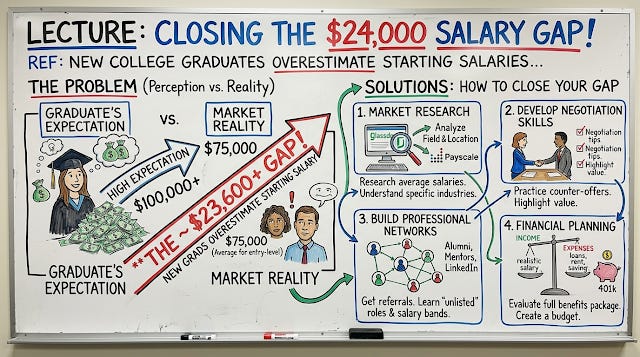
    New College Graduates Overestimate Starting Salaries by Nearly ...

    Published Mon, May 4 2026 by Jessica Dickler

    • When it comes to starting salaries, graduates in the Class of 2026 may have to lower their expectations.
    • College students expect to make $80,000 on average one year after graduation, one recent report found. The average salary for new grads is about 30% lower.
    • Although pay expectations may be high, the average starting salary for this year’s crop of graduates is rising, other data shows.

    It’s a challenging labor market for those just starting out, and new job seekers will likely have to recalibrate their earning potential.

    Today’s college seniors expect to make about $80,000 one year after graduation, according to a survey of undergraduates pursuing a bachelor’s degree by real estate site Clever in February and March.

    Yet, the average starting salary for recent graduates is $56,153, Clever found, a difference of nearly $24,000.

    More than 3 million new graduates enter the workforce every year, banking on the idea that a college degree is the ticket to a well-paying job.

    However, this year, those armed with a newly minted diploma have faced one of the toughest job markets in years. 

    A shaky outlook for jobs

    As the artificial intelligence boom reshapes the workforce, some large employers have said they’re replacing entry-level positions with AI in order to streamline operations and cut costs. Concerns about the economy and persistent inflation are also causing some companies to put hiring plans on hold.

    Amid a shaky job market, rising tuition and ballooning student loan balances, more young adults are questioning whether a college degree is worth it, several studies show. At the same time, students across majors overestimated the future value of their degrees, Clever found.

    Engineers, for example, expected a starting salary of $92,452, according to Clever, nearly 20% more than they are likely to earn one year after graduating.

    The path to financial security

    For many young adults, future earnings are key to achieving independence. Largely because of economic pressures, more recent grads have had to lean on their families for financial support years after getting their degree.

    These days, about half of parents — a record high — are pitching in to help, including paying essential monthly expenses, such as groceries, utilities and rent, according to one 2025 report by Savings.com


    The disconnect between perception and reality only worsens over time. Students anticipate that a decade into their careers they will make $144,889 on average. That’s well over the average midcareer salary of $95,521, according to Clever.

    On the upside, the unemployment rate among college graduates with a bachelor’s degree is under 4%, according to March data from the U.S. Bureau of Labor Statistics. Employers plan to hire about 5.6% more new grads from this year’s class than they hired from the class of 2025, according to a report from the National Association of Colleges and Employers.

    “Those employers who are increasing cite company growth and the commitment to succession planning as their main reasons for increasing their new college graduate hires,” said Andrea Koncz, NACE’s senior research manager.

    Rising starting salaries

    Although pay expectations may be off base, compared with last year, the average starting salary for this year’s crop of graduates is mostly higher across majors, according to a separate survey by NACE.

    “The outlook appears to be slightly better for this year’s class in terms of both hiring and salaries,” Koncz said.

    The overall average salary for new grads rose 5.5% to $68,873 from $65,276, NACE found, while typically high-paying disciplines, such as engineering or computer science, continued to notch gains.

    Computer science graduates are projected to be the highest paid of all majors for the Class of 2026, with average salaries up 6.9% to $81,535 from $76,251 in 2025. The overall average salary for engineering graduates, the second-highest-paid, currently stands at $81,198.

    Starting salaries for new grads, or adults between the ages of 20-24, at small and medium-sized businesses have bumped up as well, averaging $65,734 for the Class of 2026, up from 62,801 a year ago, according to data from payroll provider Gusto.

    Kyle Fox, the director of Alopex ID, a digital marketing agency based in Palmer, Alaska, says starting salaries for entry-level positions at his firm are around $45,000 a year, although they can rise to nearly $70,000 after a few years.

    New hires are “generally happy to have a job,” Fox said. “If you come out with a degree in media, especially up here in Alaska, entry-level positions are few and far between.”

    In fact, 67% of new college grads said they would trade higher pay for job security, according to Monster’s recent State of the Graduate report. The jobs platform surveyed more than 1,000 recent and soon-to-be graduates.

    ***** ***** ***** ***** ***** 

    Source: CNBC

    https://www.cnbc.com/2026/05/04/college-grads-overestimate-starting-salaries.html

  • April 13, 2026 4:34 PM | Bill Brewer (Administrator)

    Starbucks offers $1,200 bonuses to baristas who offer top customer service

    By 

    Aimee Picchi

    April 2, 2026 / 10:40 AM EDT / CBS News

    Starbucks is offering its baristas up to $1,200 in annual bonuses and shifting to weekly pay as the coffee chain pushes to boost sales and improve customer service.

    The company said Thursday that the bonuses are tied to whether individual Starbucks outlets meet customer service and sales goals. Moving to weekly pay should also give workers more financial flexibility, it added.

    Under CEO Brian Niccol, Starbucks has sought to energize growth and boost profits after several consecutive quarters of flat or declining sales. The most recent quarter showed improvement, with same-store sales rising 4%. Analysts attribute those results to Niccol's "Back to Starbucks" turnaround plan, which includes adding new menu items and a barista dress code aimed at improving the company's image.

    "As the company's Back to Starbucks transformation continues to deliver results and an improved customer experience in Starbucks coffeehouses, the new incentive rewards program recognizes partners for the progress they make possible," the company said in a statement. 

    Baristas can earn $300 per quarter, or $1,200 a year, in bonuses if their locations meet or exceed performance goals, which the company didn't specify. The bonus program will begin in July.

    Starbucks said it is also changing its tipping program in the chain's mobile app, as well as when customers pay by scanning the app at the register, a move the company said will make it easier for customers to add a gratuity. The company estimates baristas' tips could increase by 5% to 8% because of the change.

    ***** ***** ***** ***** ***** 

    Source: CBS News

    https://www.cbsnews.com/news/starbucks-barista-bonus-1200-customer-service/

  • April 13, 2026 4:31 PM | Bill Brewer (Administrator)

    Graduates prioritize job security over pay | Employee Benefit News

    News provided by

    Monster  | Mar 30, 2026, 08:00 ET 

    Economic uncertainty and rising AI concerns are reshaping priorities, pushing graduates toward security-first career decisions.

    GUAYNABO, Puerto Rico, March 30, 2026 /PRNewswire/ -- As the Class of 2026 prepares to enter the workforce, new survey data from Monster® shows graduates adopting a pragmatic approach to their careers, prioritizing stability over status in an uncertain job market.

    According to Monster's 2026 State of the Graduate Report, two-thirds of graduates (67%) say they would accept a lower-paying job if it offered greater long-term career security. While salary remains a top consideration when evaluating job offers (68%), job security (52%) now ranks above career growth opportunities (49%) among graduates' top priorities.

    That shift reflects a broader adjustment in expectations. Nearly seven in 10 graduates (69%) say they are more willing to compromise on their ideal role than they were a year ago.

    "Today's graduates are entering the workforce with ambition, but also realism," said Monster career expert Vicki Salemi. "Pay matters, but stability is increasingly shaping early career decisions. Many are weighing long-term security more heavily than rapid advancement."

    Confidence in landing a job remains relatively high, but not universal. While 79% say they are confident they will receive a job offer within three months of graduation (down from 83% in 2025), more than 1 in 5 (22%) are not confident they'll secure an offer in that timeframe. Expectations around job search timelines also reflect caution: 35% anticipate their search will take four months or longer.

    At the same time, concern about structural factors shaping the workforce is rising. Nearly nine in 10 graduates (89%) worry AI could replace entry-level roles, up from 64% last year. Concern about the broader economy remains steady, with 76% saying they are worried about its impact on job prospects.

    Key Findings

    • Stability matters: 67% would accept lower pay for long-term career security.
    • Pay leads, but stability outranks growth: Salary is a top consideration (68%), and job security (52%) ranks above career growth opportunities (49%).
    • Expectations are shifting: 69% are more willing to compromise on their ideal role than they were a year ago.
    • Short-term tradeoffs are on the table: 75% say they would accept a job they expect to leave within a year if it provided immediate income.
    • Job searches may take longer: 35% expect their job search to take four months or longer (20% expect 4–6 months; 15% expect more than six months)
    • AI concern is rising: 89% worry AI could replace entry-level roles, up from 64% in 2025.
    • Economic anxiety remains steady: 76% are concerned the economy will affect their job prospects.

    Financial and Career Priorities
    Economic uncertainty continues to shape graduate decision-making.

    While salary remains a key factor, stability is clearly influencing choices. Two-thirds (67%) say they would accept a lower-paying role if it offered greater long-term security. 

    At the same time, many are prioritizing immediate financial footing. Three in four graduates (75%) say they would accept a job they expected to leave within a year if it provided income.

    The most important considerations when evaluating a job offer include:

    • Salary — 68%
    • Job security — 52%
    • Work-life balance — 52%
    • Career growth opportunities — 49%
    • Benefits (health insurance, PTO, etc.) — 48%
    • Remote or flexible work options — 32%
    • Company values — 17%

    A More Pragmatic Outlook
    Graduates are also demonstrating increased flexibility in how they approach early career decisions. Nearly seven in 10 (69%) say they are more willing to compromise on their ideal role than they were a year ago. Additionally, three in four (75%) say they would accept a job they expected to leave within a year if it provided immediate income.

    Together, these responses point to a generation balancing ambition with practicality as they navigate a changing workforce landscape.

    The Bottom Line
    Compared to last year, graduates remain optimistic about their prospects but are adjusting expectations in response to economic and technological realities. Stability is becoming a defining priority. Many are willing to trade pay or ideal-fit roles for long-term security, even as concerns about AI's impact on entry-level opportunities continue to grow. These signals suggest a workforce entering the market focused not just on getting hired, but on building sustainable careers.

    Methodology
    This survey was conducted by Pollfish on February 17, 2026 among more than 1,000 U.S.-based recent and impending college graduates. Respondents answered a series of multiple-choice questions exploring job market outlook, job search expectations, AI readiness and concerns, and early-career priorities. The sample included graduates and students spanning the Classes of 2023 through 2027.

    For more information, please view the full report at https://www.monster.com/career-advice/research/2026-state-of-the-graduate-report

    ***** ***** ***** ***** *****

    Source: PR Newswire

    https://www.prnewswire.com/news-releases/stability-over-salary-67-of-new-graduates-would-take-lower-pay-for-security-302727489.html

  • November 05, 2025 10:45 AM | Bill Brewer (Administrator)

    An employee uses a handheld device to check inventory in a retail toy aisle.

    Published Oct. 23, 2025 | Kate Tornone

    While the compensation option may be well associated with executives and tech startups, it’s increasingly being offered elsewhere, such as to Walmart store managers.

    Equity grants — a compensation option that gives employees company stock — are increasing in popularity around the globe, according to a report published last week.

    That means HR professionals should think beyond pay and design compensation strategies that integrate short-term cash rewards with long-term equity incentives, according to Deel and Carta research.

    “Positioning equity as a central component — not a supplementary perk — can help attract top talent, align employee interests with company growth, and improve retention without overextending fixed payroll costs,” according to the firms.

    Such efforts are particularly important for employers aiming to be competitive in certain industries or in a global market, they said. 

    For example, equity is increasingly valued as part of total compensation in emerging markets like Brazil and India, according to the report. There’s also a shift toward equity-heavy compensation for technical talent, it showed — something that could be relevant for employers seeking specialized AI talent.

    While the compensation option may be well associated with executives and tech startups, it’s increasingly being offered elsewhere — like to Walmart store managers, for example. The employer last year announced plans to add $20,000 in stock grants to the annual compensation packages of Supercenter store managers in the U.S. The company said managers of other types of Walmart stores would be eligible for $10,000 and $15,000 stock grants.

    ***** ***** ***** ***** ***** 

    Source: HR Dive

    https://www.hrdive.com/news/equity-isnt-just-for-executives-stock-grants-employees/803637/

  • November 05, 2025 10:42 AM | Bill Brewer (Administrator)

    Two people talk in front of a "now hiring" sign.

    Published Oct. 24, 2025 | Emilie Shumway

    While experts predicted job seekers would be more influenced by the offer of negotiation coaching, a simple message that employers expect negotiation nudged more job seekers to try it, results showed.

    Workers avoid negotiating compensation more because they believe employers are not open to it than because they don’t think they have the proper skills, according to researchers from Harvard, Brown and University of California Los Angeles. 

    The researchers conducted an experiment involving more than 3,100 job seekers in the U.S. tech sector, according to a white paper published by the National Bureau of Economic Research. The job seekers were 31 years old on average, had seven years of work experience and made annual compensation between $217,000 and $221,000. Many worked for top tech companies like Google, Apple and Meta.

    Workers were surveyed on past experience and beliefs about salary negotiations and then targeted with two different approaches. One received an “encouragement” treatment, which involved receiving a simple message like “companies expect you to negotiate” and “don’t feel guilty for negotiating.” The other approach offered workers a coaching option with a discount of more than 80% to help them improve their salary negotiation skills.

    Among the first group who had received job offers within a period of several months, 61% countered their initial offer, compared to a control group of 54%. They received on average an increase in compensation of 12.45%, or equivalent to $27,000 annually.

    In comparison, among the group who received the discounted coaching option, few took up the offer (only 3%, compared to 1% who received no discount). And even among those who received the coaching, it had “no meaningful effect on negotiation attempts,” the researchers said. 

    The results are surprising even among experts, the researchers found. They asked 117 academics to predict what would happen with their experiments, and “most predicted that the coaching treatment would be more effective than the encouragement treatment in increasing negotiation rates and compensation — whereas we find the opposite.”

    More than half of workers don’t negotiate their salary, various studies have found. While the NBER white paper suggests they are leaving money on the table, a recent weakening of the economy — especially the tech sector — may be influencing job seekers’ habits. 

    More recent coverage of the study by UCLA Anderson Review noted that the job market has fallen in strength since the experiment was conducted (May 2023 through February 2025), and Ricardo Perez-Truglia, the participating UCLA researcher, said the “benefits (and risks) of negotiating compensation may rise or fall.” 

    According to data released by ZipRecruiter in April, fewer workers negotiated their offers or received signing bonuses in early 2025, and new hires were less likely to increase their pay or receive a counter-offer from their former employer.

    ***** ***** ***** ***** ***** 

    Source; HR Dive

    https://www.hrdive.com/news/why-employees-dont-negotiate-compensation/803596/

  • September 08, 2025 10:15 AM | Bill Brewer (Administrator)

    A Social Security card sits next to US Treasury checks.

    PNC Bank Survey Offers Insights, Analysis on Financial Wellness Mindset Among U.S. Workers and Employers

    PITTSBURGH, Aug. 27, 2025 /PRNewswire/ -- PNC Bank today released findings from its third annual Financial Wellness in the Workplace Report entitled, "What today's workers value most, across generations," which summarizes survey data and in-depth interviews from more than 1,000 U.S. workers and more than 500 U.S. employers to better understand the financial health and wellness of today's workforce.

    Overall, the survey revealed broad consistent trends when compared with previous years' results, though the percentage of workers who reported being stressed about their finances ticked down slightly. The survey findings show that 68% of workers report being "somewhat" or "very" stressed about their financial situation — down slightly from 70% in 2024 and 71% in 2023. Notably, in 2025, 69% of employers surveyed believed their workers to be facing financial stress, which was down significantly from the 78% reported in 2024 and slightly from the 71% reported in 2023.

    Other notable findings include:

    • Boomers are feeling better year-over-year. Among those surveyed, 48% of Baby Boomers said they were better off financially this year compared to last year. Across other generations, 38% of Gen X survey participants, 31% of Millennial participants and 18% of Gen Z participants reported feeling better about their financial situation in 2025 compared to 2024.
    • Most U.S. workers are comfortable managing debt. Of those surveyed, 72% of workers said they are at least "somewhat" confident in managing debt. Significantly, Gen Z and Gen X reported being less concerned about student loans compared to last year, and Boomers were less concerned about auto and finance loans in 2025 compared to 2024. Millennials' debt concerns are about the same as last year across all types of loans.
    • Confidence level for meeting retirement goals varies across generations. Gen Z is the most confident, with 56% reporting they are "somewhat" or "very confident" they will meet their retirement goals. Millennials (50%) and Boomers (50%) were equally confident, while Gen X (43%) were the least confident in their ability to meet retirement goals.
    • Employers generally think their workers are prepared for retirement. A majority (78%) of U.S. employers believe their workers are prepared for retirement. Conversely, only 45% of workers believe they are prepared for retirement.
    • U.S. workers are more likely to stay with an employer that offers more financial wellness benefits. A significant majority (81%) of U.S. workers surveyed said they are more likely to stay with an employer that offers financial wellness benefits, which is up from 78% in 2024. Additionally, 96% of U.S. employers believe they have at least some responsibility to offer financial wellness benefits, up from 94% last year.

    "Today's workforce spans multiple generations, each with its own set of financial goals," said Kaley Keeley Buchanan, senior vice president and head of PNC Organizational Financial Wellness. "To attract and retain top talent, employers must offer individualized benefits to employees that resonate across age groups and life stages. The PNC Organizational Financial Wellness team has unique understanding and insights to help businesses deliver targeted, high-impact benefits that help support employee well-being, boost performance and foster long-term loyalty."

    Additional notable findings include:

    • Among workers surveyed, 67% reported living paycheck to paycheck. That's up from 63% from last year.
    • However, workers generally reported being in more control of their finances in 2025 (62%) compared to 2024 (56%).
    • A financial planning benefit was available to 30% of workers surveyed in 2025, compared with 28% in 2024.

    With today's workforce indicating they are more likely to stay with an employer that offers financial wellness benefits, businesses must adapt their approach to stay competitive and retain top talent. PNC Organizational Financial Wellness partners with companies to design and deliver innovative, customized benefits that support both business goals and the evolving needs of the people they aim to hire and keep. More findings, including the complete report and related information are available at pnc.com/WorkplaceReport.

    PNC Bank, National Association, is a member of The PNC Financial Services Group, Inc. (NYSE: PNC). PNC is one of the largest diversified financial services institutions in the United States, organized around its customers and communities for strong relationships and local delivery of retail and business banking including a full range of lending products; specialized services for corporations and government entities, including corporate banking, real estate finance and asset-based lending; wealth management and asset management. For information about PNC, visit http://www.pnc.com.

    Methodology
    The 2025 Financial Wellness in the Workplace Study1,2 was conducted in early 2025 and surveyed two different populations: U.S. employers and U.S. workers. The research was conducted in two phases: PHASE 1: QUALITATIVE In-depth interviews, separately, with employers and workers in January 2025. PHASE 2: QUANTITATIVE Separate online surveys with employers and workers in March 2025. The Employer Survey was conducted online with a national sample of 500 U.S. employers with 100+ workers and annual revenues of $5 million or more. The sampling error is +/- 4.4% at the 95% confidence level. The Workers Survey was conducted online with a national sample of 1,000 U.S. workers ages 21–69 who work full time at companies with 100+ workers. The sampling error is +/- 3.0% at the 95% confidence level. The study was conducted by Willow Research, a custom market research firm and certified woman-owned business. Gen Z 1997-2012, Millennial 1981-1996, Gen X 1965-1980, Boomer 1946-1964.

    DISCLAIMER: This report was prepared for general information purposes only and is not intended as specific advice or recommendations. Any reliance upon this information is solely and exclusively at your own risk. NOTE: The sum of percentages may not add to the total due to rounding.

    ***** ***** ***** ***** ***** 

    Source PR Newswire

    https://www.prnewswire.com/news-releases/pnc-bank-survey-offers-insights-analysis-on-financial-wellness-mindset-among-us-workers-and-employers-302540111.html

  • August 15, 2025 12:20 PM | Bill Brewer (Administrator)

    Student loan borrowers and advocates gather for a rally.

    Employers have a “balancing act” of providing flexibility but also making sure employees are actually taking time off, an expert at Goldman Sachs Ayco told HR Dive.

    Published Aug. 14, 2025 ... by Ginger Christ 

    By letting workers convert unused PTO into cash, student loans or 401(k) contributions, more employers are giving workers choice. Goldman Sachs Ayco’s 2025 Benefits and Compensation Trends report, published earlier this year, showed some employers even permit workers to convert their time into health savings account contributions; into charitable giving, including donating time off to co-workers; and into 529 plan, or qualified tuition, programs.

    “This really kind of fits in with the overall trend we’ve seen the last few years about large employers specifically really trying to provide as much flexibility in their PTO programs as possible,” said Kris Battistoni, vice president, compensation and benefits solutions at Goldman Sachs Ayco. 

    Jonathan Barber, vice president and head of compensation and benefits solutions at Goldman Sachs Ayco, called the benefits situation a “perfect storm.” Workers, often in hybrid and remote roles, are taking less PTO and want flexibility, and companies are willing to offer flexibility using dollars they’ve already set aside, Barber said. 

    “We’re seeing that across the board with employee benefits,” Barber said. 

    However, it’s not a free-for-all, they warned. The benefits and compensation trends report shows that most companies limit how many hours can be converted annually; the limit typically is 40 hours per year. 

    Employers have a “balancing act,” Battistoni said, of providing flexibility but also making sure employees are actually taking time off.

    There are some things employers need to keep in mind when implementing a conversion program, Barber warned. Employee paid leave laws vary by state and even sometimes by municipality, so they need to ensure workers still get the legally required amount of vacation and sick time, he said. 

    While the PTO conversion trend is emerging, the number of companies offering such options is still in the single digits percentage-wise, said Battistoni, who called PTO “the next frontier” for flexibility in benefits.

    “The purchase programs are probably more popular than the conversion programs at this point,” Battistoni said. “I think we’ll see an increase in both.”

    The company’s trends report shows that about 25% of its corporate partners offer PTO purchase programs, which allow workers to buy and sell vacation days, typically up to five days.

    “We might be in the single digits now, but that’s certainly not going to be the case, probably two, three, four years down the road,” Battistoni said of PTO conversion programs.

    ***** ***** ***** ***** ***** 

    Source: HR Dive

    https://www.hrdive.com/news/employers-let-workers-trade-in-pto-for-cash-student-loan-payments/757643/

  • August 15, 2025 12:16 PM | Bill Brewer (Administrator)

    Economic uncertainty affects economic decisions

    August 05, 2025

    Employers and U.S. workers express differing views about artificial intelligence (AI), job satisfaction, benefits offerings and more

    HARTFORD, Conn.--(BUSINESS WIRE)-- Financial stress remains high among U.S. workers, according to the latest research from The Hartford, a leading provider of employee benefits and workers’ compensation. The sixth annual Future of Benefits Study, released today, presents perspectives of U.S. workers and employers regarding personal finances, AI and technology trends, workplace benefits, and other factors influencing today’s fast-changing business landscape.

    “As financial concerns continue to weigh on U.S. workers, it’s clear that workplace benefits are more than just a perk – they’re a meaningful source of financial support and well-being,” said Mike Fish, head of Employee Benefits at The Hartford. “Employers can help the workforce navigate through uncertainty by ensuring they have access to benefits and the education needed to fully understand and utilize them. Employers and insurers have an opportunity to help their workers take control of their financial future with confidence.”

    The study, which polled U.S. workers and HR professionals (employers), finds that most U.S. workers (72%) are at least somewhat stressed about their household finances, with one-third (33%) reporting they are very/extremely stressed. This is consistent with last year’s findings, which found 72% were at least somewhat stressed about their household finances, with 34% reporting they were very/extremely stressed. Other key findings include:

    • Half of U.S. workers (51%) report they are living paycheck to paycheck;
    • 53% of U.S. workers say their savings have decreased in the past 12 months; and
    • More than half of U.S. workers (56%) report financial health is negatively impacting their workplace productivity.

    Value of Employee Benefits

    Amidst a backdrop of economic uncertainty, U.S workers are turning to their employers for support. The study reveals workplace benefits play a critical role in helping U.S. workers protect their finances, with most employers (80%) and workers (62%) recognizing the essential role benefits have in making them feel more financially secure. At the same time, a significant majority of employers (75%) say the benefits they offer are underutilized, creating an opportunity to educate employees about how employee benefits can provide additional financial security. Employers are adding to the benefits they offer to support their workers – 34% added benefits in 2025 and 53% plan to add benefits in 2026. While employer-provided benefits are key to improving financial well-being and overall job satisfaction, confusion remains a barrier.

    “To bridge this gap, employers have an opportunity to be proactive in educating and engaging their employees to ensure they have access to the necessary resources and feel confident using them,” Fish said. “This requires a strategic shift – moving beyond enrollment periods and adopting a year-round approach to communication, personalized guidance, and digital tools that enhance accessibility.”

    Benefits are also an important factor for job seekers. According to the study, 82% of U.S. workers say benefits are a key consideration when searching for a new job, and 58% would consider switching jobs for a more comprehensive benefits package.

    Digital Split Around AI And HR Technology

    Technology and AI-driven solutions have emerged as potential game-changers, providing personalized benefit recommendations and streamlined decision-making. However, there is a gap between employer and U.S. workers’ feelings about AI in the workplace – 72% of employers feel more optimistic this year than they did in 2024 about the use of AI in the workplace, and only 29% of employees say they are more optimistic. Addressing this disparity will require employers to be transparent and ensure that digital enhancements feel intuitive, reliable, and truly beneficial to employees.

    Although technology continues to enhance the overall benefits experience, when it comes to completing certain benefits-related tasks, U.S. workers continue to prefer working with a person. U.S. workers prefer to interact with a person when:

    • Requesting a leave of absence: 58%, an increase from 53% in 2024;
    • Learning about benefits during open enrollment: 48%, an increase from 43% in 2024; and
    • Selecting benefits during open enrollment: 47%, an increase from 42% in 2024.

    The Hartford is a leading provider of employee benefits products and services, including leave management, group life and disability insurance, as well as other voluntary products. For more information, visit www.thehartford.com/employee-benefits.

    Study Methodology

    The Hartford’s 2025 Future of Benefits Study was fielded March 4-28, 2025, and included 701 employers and 1,000 U.S. workers. The employers surveyed were HR professionals who manage/decide employee benefits, and U.S. workers surveyed were actively employed. The margin of error for employer responses is +/- 3% and for U.S. workers is +/-3% at a 95% confidence level. Download the full Future of Benefits Study at www.thehartford.com/futureofbenefits.

    ***** ***** ***** ***** ***** 

    Source: The Hartford

    https://newsroom.thehartford.com/newsroom-home/news-releases/news-release-details/2025/The-Hartfords-New-Study-Finds-Continued-Financial-Stress-Among-U-S--Workers-Amid-Economic-Uncertainty/default.aspx

  • July 09, 2025 8:44 AM | Bill Brewer (Administrator)

    SHRM panelists on stage

    Employers have several options at their disposal, even if only for the 1% to 2% of workers who are most in need, a SHRM 2025 panel moderator told attendees.

    *****

    Published July 2, 2025 by Ginger Christ, Editor

    SAN DIEGO — Applied Materials’ student loan repayment program for employees reaped such rewards that the company more than doubled its annual contribution after the first year, Tes Fernandez, director of U.S. benefits for the company said Monday during a panel discussion at SHRM 2025.

    In year one, the manufacturing company contributed $2,000 per employee in direct repayment of workers’ student loans. In the years that have followed, Applied Materials now pays out $4,800 per employee and uses the benefit as both a way to support generally newer hires, recent graduates and some underrepresented groups and as a recruiting tool.

    “They had to go up to the CFO and ask for extra millions of dollars to add this benefit. A year later, they more than doubled the benefit amount, not because the CFO got generous, but because they were seeing the results of the benefits,” Chris Rinko, VP and student debt and health and wellness benefits administration account executive at Fidelity Investments, said during the panel, which he moderated.

    When it comes to student loan debt assistance, employers have two choices, Rinko explained. They can either provide a direct payment to student loan servicers to help pay down employees’ loans, or they can elect to offer matching contributions in the 401(k) plans of workers who demonstrate they are making student loan payments.

    The direct payment method can be targeted to only apply to certain groups — those who earn less or those in a specific job, for example — and can have a set end date, Rinko said, while matching contributions are tied to a company’s overall 401(k) plan offering and can’t exclude any workers.

    Tracey Gannon, a senior benefits manager at eBay, said it was “kind of a no-brainer” for the e-commerce company to offer matching funds after the passage of the SECURE 2.0 Act. The law gave employers the ability to match employee contributions to certain student loan payments.

    “We felt that this was just such an easy first step,” Gannon said.

    The company already budgets for all employees to get the full matching contribution in their retirement plans and has a 96% participation rate, Gannon said. That meant the new offering wasn’t a big budget item for the company but could provide support to some employees in need.

    Similarly, offering a matching contribution seemed like “an easy win” for The Walt Disney Co. and its workers, said Marianne Lynch, a senior manager of executive benefits and hypercare for the company.

    “It’s a huge, huge benefit to reduce that burden” of student loan debt, Lynch said. At Disney, 97% of employees already receive the full 401(k) match, but for those who don’t, it’s a way not to miss out on the matching funds to which they’re already entitled, she added.

    “The only change here is you’re giving them another way to earn that match by paying their student debt,” Rinko said.

    At companies where most employees already receive the full matching contribution, some leaders may ask, “Why bother?” with a student loan repayment match, Rinko said.

    “The reason is, if it’s just 1% or 2%, if you can find a path for that small number, for those people who are usually in the greatest need to earn the match, why not?” Rinko said.

    ***** ***** ***** ***** ***** 

    Source: HR Dive

    https://www.hrdive.com/news/student-loan-payment-assistance-no-brainer-shrm-2025/752224/

<< First  < Prev   1   2   3   4   5   ...   Next >  Last >> 

Member Login (click below)

© 2026 OCCABA

OCCABA
PO Box 9644
700 E Birch St
Brea, CA 92822

Powered by Wild Apricot Membership Software